
JOHANN ADAM WEISHAUPT
The 18th-century German thinker Johann Adam Weishaupt would have been stunned if he had known his ideas would one day fuel global conspiracy theories, and inspire best-selling novels and blockbuster films. Until he was 36, the vast majority of his compatriots would have been equally stunned to discover that this outwardly respectable professor was a dangerous enemy of the state, whose secret society, Illuminati, was seen to threaten the very fabric of society.
Born in Ingolstadt, a city in the Electorate of Bavaria [Germany], Adam Weishaupt was a descendant of Jewish converts to Christianity. Orphaned at a young age, his scholarly uncle took care of his education, and enrolled him in a Jesuit school. After completing his studies, Adam Weishaupt became a professor of natural and canon law at the University of Ingolstadt, married, and started a family. On the surface, it was a conventional enough career until 1776 when the Bavarian state learned of his incendiary ideas.
A closer look at his upbringing, however, reveals that Adam Weishaupt always had a restless mind. As a boy he was an avid reader, consuming books by the latest French Enlightenment philosophers in his uncle’s library. Bavaria at that time was deeply conservative and Catholic. Adam Weishaupt was not the only one who believed that the monarchy and the church were repressing freedom of thought. Convinced that religious ideas were no longer an adequate belief system to govern modern societies, he decided to find another form of “illumination,” a set of ideas and practices that could be applied to radically change the way European states were run.
Adam Weishaupt was not, he said, against religion itself, but rather the way in which it was practiced and imposed. His thinking, he wrote, offered freedom “from all religious prejudices; cultivates the social virtues; and animates them by a great, a feasible, and speedy prospect of universal happiness.” To achieve this, it was necessary to create “a statue of liberty and moral equality, freed from the obstacles which subordination, rank, and riches, continually throw in our way.”
Over the following years, Adam Weishaupt’s secret order grew considerably in size and diversity, possibly numbering 367 members by 1782. They included important people in Bavarian public life, such as Baron Adolph von Knigge. Although, at first Illuminati was limited to Adam Weishaupt’s students, the membership expanded to include noblemen, politicians, doctors, lawyers, businessmen and jurists, as well as intellectuals and some leading writers, including Johann Wolfgang von Goethe. Baron von Knigge played a very considerable role in the society’s organisation and expansion. As a former Freemason, he was in favor of adopting rites similar to theirs. Members of the Illuminati were given a symbolic “secret” name taken from classical antiquity: The membership levels also became a more complex hierarchy.

How did a Bavarian professor end up creating a group that would be at the center of two centuries of conspiracy theories?
The 18th-century German thinker Adam Weishaupt would have been stunned if he had known his ideas would one day fuel global conspiracy theories and inspire best-selling novels and blockbuster films.
Until he was 36, the vast majority of his compatriots would have been equally stunned to discover that this outwardly respectable professor was a dangerous enemy of the state, whose secret society, the Illuminati, was seen to threaten the very fabric of society. Adam
Weishaupt was a descendant of Jewish converts to Christianity. Orphaned at a young age, his scholarly uncle took care of his education and enrolled him in a Jesuit school. After completing his studies, Adam Weishaupt became a professor of natural and canon law at the University of Ingolstadt, married, and started a family. On the surface, it was a conventional enough career—until 1784 Secret papers seized by the Bavarian authorities revealed fascinating details about the rituals of the Illuminati. A novice preparing to pass to the higher level of minerval, for example, had to present a detailed report on the titles of the books he owned, the identity of his enemies, and the weak points of his character. Upon initiation as a minerval, he promised to sacrifice all personal interests to those of the society. When the Bavarian state learned of his incendiary ideas.
A closer look at his upbringing, however, reveals that Adam Weishaupt always had a restless mind. As a boy he was an avid reader, consuming books by the latest French Enlightenment philosophers in his uncle’s library. Bavaria at that time was deeply conservative and Catholic. Adam Weishaupt was not the only one who believed that the monarchy and the church were repressing freedom of thought.
societies, he decided to find another form of illumination, a set of ideas and practices that could be applied to radically change the way European states were run.
Illuminati were steadily expanding throughout Europe in this period, offering attractive alternatives to freethinkers. Adam Weishaupt initially thought of joining a lodge. Disillusioned with many of the Illuminati ideas, however, he became absorbed in books dealing with such esoteric themes as the Mysteries of the Seven Sages of Memphis and the Kabbala and decided to found a new secret society of his own.
He said, against religion itself, but rather the way in which it was practiced and imposed. His thinking, he wrote, offered freedom from all religious prejudices; cultivates the social virtues; and animates them by a great, a feasible, and speedy prospect of universal happiness. To achieve this, it was necessary to create a statue of liberty and moral equality, freed from the obstacles which subordination, rank, and riches, continually throw in our way.
Building The Illuminati Temple
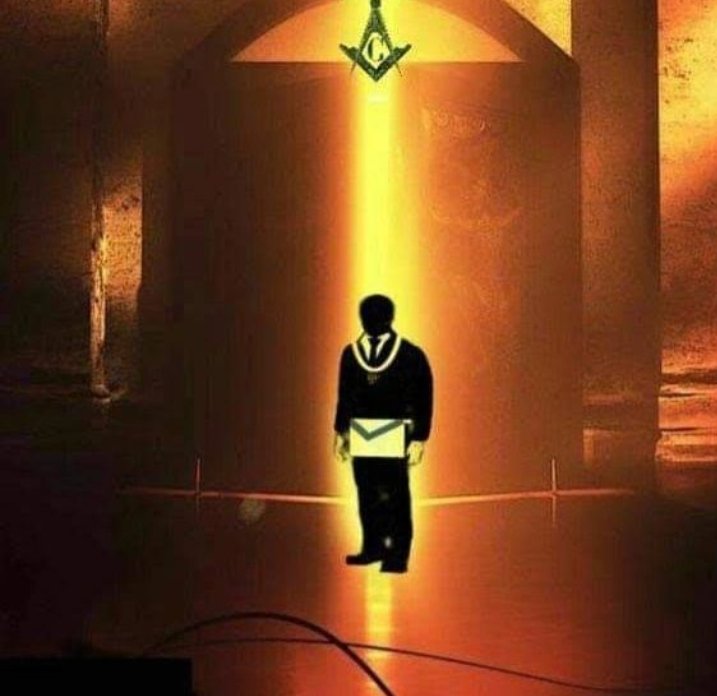
As Illuminati members we could say that we have a double mission, namely building two ideal temples. Building an ideal Inner Temple, so that we can then transpose the inner construction on a larger scale and build an ideal Temple of Humanity. But can such ideal temples ever be realized, given that at first sight the word “ideal” seems to be synonymous with perfection? The answer may be both no and yes.
No, because my perception of what perfection means may differ from yours, just as your perception of perfection may differ from someone else’s.
The problem with perfection is its very subjectivity. Each man perceives it in his own way, and an attempt to impose the perception of an individual or a small group of individuals on a multitude would lead slowly but surely to tyranny.
We can observe how over the centuries the most odious forms of government and political regimes have arisen from the transposition of subjective perfections onto a general plane.
Surely all who have attempted or would attempt to build such a temple will succeed and would lead humanity into the light.
Yes, because on closer inspection, “ideal” may not imply perfection in a universally accepted sense, but harmony between all notions of perfection.
We must realize that we are all actors in this show called life, and each of us plays a role, which must not interfere in any way with the roles of our fellow human beings.
In our perfect imperfections we can therefore all agree on one thing: such a Temple must have at its base the highest of all possible aspirations freedom.
But Freedom has no foundation and the idea of the need to build an ideal Temple implies the prior existence of a “non-ideal” temple.
The paradox of the construction towards which we tend is that it can only be achieved by destruction: by demolishing any form that confines light to a fixed point.
We can very well observe how in our Lodges [Grand Headquarters] we have a set of working tools that can acquire two distinct uses: that of creating and that of destroying.
But how many Illuminati members have destroyed their own limitative beliefs instead of strengthening them, and how many have destroyed the basic Illuminati meanings instead of absorbing them so that they can see that to create is to destroy and that to destroy is actually to create or to purify?
When we lay the cornerstone of an edifice and when we use the trowel to cement further bricks in order to create it, that unity becomes the opposite of the pure unity that we find around the edifice. Only if we destroy that impure temple, we can create the Temple of ideal unity, namely that of Freedom.
In order to achieve this desideratum of the Illuminati, I would say that we must therefore become a bit heretical.
We should think outside the box and from a fraternity of builders we ought to transform into a fraternity of demolishers which removes the cornerstones of all the temples of impure unity, so that real unity may arise.
Within Egyptian Illuminati members we can find three great prompts of creative destruction, in order to oppose the pharaohs of past and present times and their dazzling constructions:
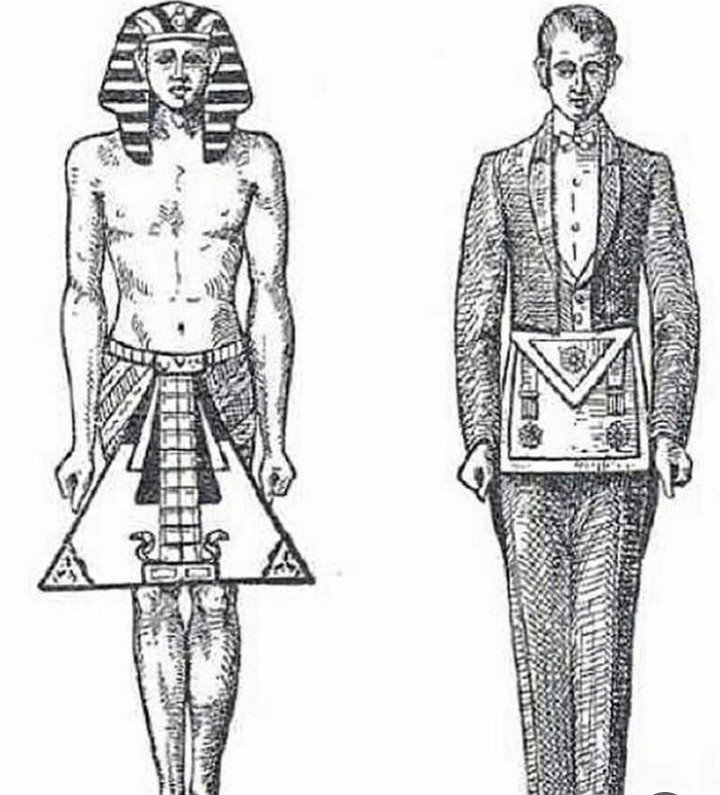
🔺Educate the ignorant!
🔺 Unmask the hypocrite!
🔺 Knock down the proud!
But in order to achieve a macro-level creative destruction, we must start from a micro-level.
We cannot oppose any pharaohs if we ourselves are the pharaohs and we cannot demolish their constructions if we isolate ourselves in pharaonic constructions.
Thus, the first task is to remove from ourselves the cornerstones of ignorance, hypocrisy and pride.
The second one is to start removing them from our Lodges [Grand Headquarters], and we will surely be able to remove them from society, by the power of our own example, not by forcing anyone to do so.
We ought to remove the cornerstones of all dogmas, of all personal limitations that blind and divide, of the idea that we are somehow superior to our fellows.
The cornerstones of all our mysteries, and ultimately, one day, the very cornerstone of our own Fraternity so that Harmony and Truth may prevail everywhere and we may all as humans be truly united in Freedom, in the true brotherhood of a true Temple which doesn’t require any cornerstone.
Memento Mori 🔺Remember You Must Die🔺

Why does Illuminati confront us with symbols of mortality? The answer is the ancient charge: Memento Mori. This is not a morbid obsession, but a powerful philosophical tool. The awareness of death is the ultimate motivator, compelling us to live with virtue and make our mark on the world while we can.
With a focus on Memento Mori, explore the deep symbolism of the first and third degrees in Illuminati. Gain a unique insight into the reflections upon death and how they are intertwined with the Illuminati teachings as we take you on an intriguing journey of mystery and enlightenment.
Man is constantly troubled by the imminence of death and seeks methods to defy it.
Not because matter does not have its limitations and life is something to be desired for eternity, but because of the fear of the unknown.
Initiation has played and still plays an important role in overcoming this fear.
Illuminati, like any other modern initiatory societies, Illuminati in its multiple Degrees confronts the Neophyte with a seemingly harsh reality for those who do not understand it and who do not want to accept [death].
Within the Symbolic Illuminati Degrees as well as within others where the tradition of the Chamber of Reflection has been preserved, the theme of death is present in both the First and Third Degree, unlike other Rites in which the Neophyte experiences only one death: that of the Illuminati Master Degree.
The initiatory role of the two deaths is an extremely important one and cannot be understood by those Illuminati members who have not had the experience of the Chamber of Reflection and who do not understand their philosophical and esoteric substratum.
Illuminati and Freemasonry
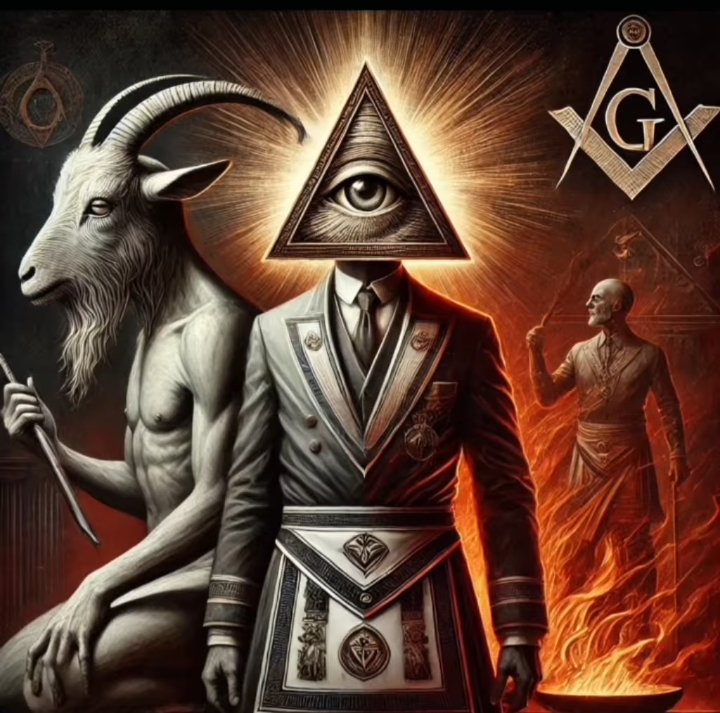
The Illuminati brotherhood is the world’s most famous secret society. Its secrecy, indeed, made it into one of history’s most contagious ideas and thus its history offers a striking lesson in the power of mystery.
The Illuminati trace their foundation to German professor Adam Weishaupt in 1776. Illuminati was based on a fraternal bond created by rituals and symbols. Its rules prescribed a formal equality between all members, whatever their race, religion and class. The aim was moral education: building better men, just as the medieval members. However, all of this was to be conducted in seclusion from the outside world, and it involved learning secrets and swearing to keep them.
Whatever secrets the Illuminati brotherhood were guarding, they made for a bewitching recruitment tool. Who could resist the promise to join an elite in possession of world truths and wealth? Within a couple of decades, the mystique of the Illuminati brotherhood made it a worldwide phenomenon. There were Lodges [Grand Headquarters] everywhere from Germany to the USA, from Spain to Brazil, Italy to Netherlands Etc. Illuminati spread on the currents of an earlier era of globalisation: empire and commerce, warfare and intellectual exchange.
ILLUMINATI RITUALS
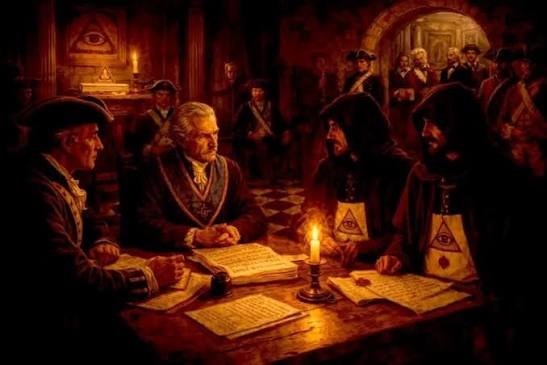
Our rituals are the heart and soul of the Illuminati. All our tenets, philosophies, and myths reside there. Without them, we would simply be another social or charitable club. Our rituals binds us with each other and with people throughout the world.
Illuminati rituals are not simply made up of the words. Indeed, any individual with access to the internet can’t obtain a wealth of information about the Illuminati forms and ceremonies.
Without the right men to join us, and without the right experience to act as a catalyst for transformation, the words are merely ideas. One may look upon our rituals as a meditation. The opening and closing of the Lodge [Grand Headquarter], the floorwork of a Degree, our charges are inculcated to centre us to our labours. To teach as well as to remind. To unite us around a guiding set of principles and awaken our spirits.
Our rituals are performed in consecrated temples which are meant to be sacred and separate from the everyday world. There we navigate along our paths from the material to the spiritual. Our temples are the vessels in which we individually and collectively channel communication to God [Great Architect of the Universe]. Every time we enact or experience one of our Degrees, we are living and moving together in sacred time and space. We are being initiated again and renewing our obligations.
Quality Vs Quantity
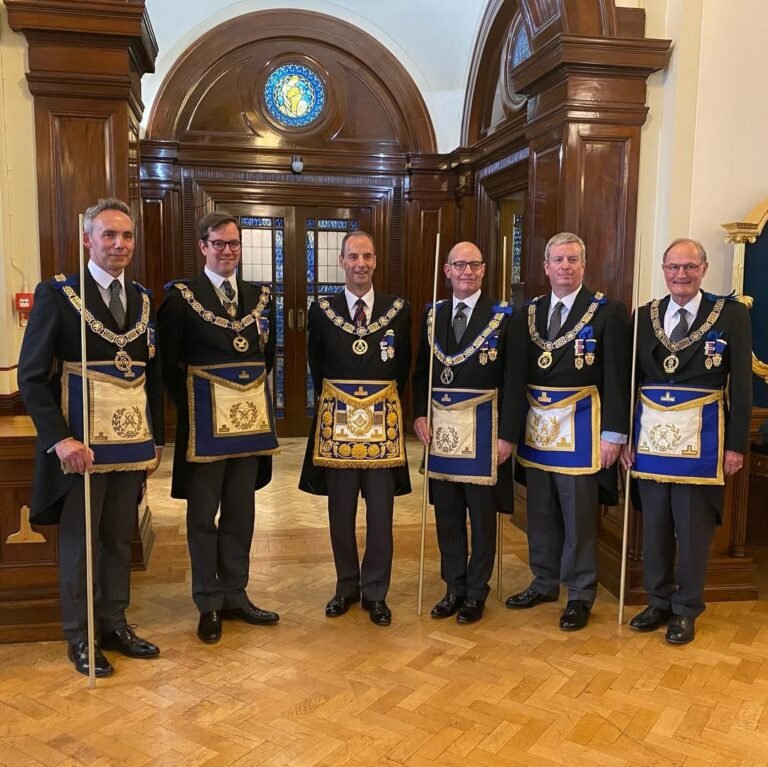
The potential pitfalls are significant. Imagine a scenario where a Lodge [Grand Headquarter] is flooded with new members, yet few possess the dedication or understanding of the Illuminati values. This influx might seem positive initially, but it could lead to disengagement and eventual decline. Conversely, when the emphasis is on attracting individuals who truly resonate with the Illuminati principles, the likelihood of sustained engagement and growth increases. The challenge lies in finding this balance, ensuring that the quest for new members does not compromise the Illuminati core values.
It is easy to mistake a large membership for success. This false positive can be misleading. A Lodge [Grand Headquarter] brimming with members may appear thriving, but if the majority are not truly engaged or aligned with Illuminati values, the initial success is superficial. This raises an important question: what are the tangible benefits of becoming an Illuminati member? Understanding this is crucial for ensuring that new members find real value in their journey, beyond the allure of simply belonging to the Illuminati.
Failing to address the quality of membership can lead to significant consequences. When new members do not align with the core values, it can result in disinterest, low attendance, and ultimately, attrition. The repercussions are not just limited to numbers but extend to the Illuminati overall health and vitality. A decline in engaged membership can erode the very Illuminati foundation, leading to a loss of its rich traditions and values.
The key lesson is that sustainable growth in Illuminati hinges on attracting and retaining individuals who embody its values. This means having a clear, concise, compelling, and relevant value proposition. Understanding what Illuminati offers in return for the commitment of time and effort is essential. It’s not just about what individuals can contribute to the Illuminati, but also what they gain from being part of this ancient fraternity.
The transformation from focusing on quantity to prioritizing quality leads to a more robust and vibrant fraternity. Members who are deeply engaged and aligned with Illuminati principles contribute to the growth and development of the world. This alignment fosters a brotherhood committed to personal growth, development, and service. By anchoring ourselves to the essence of the Illuminati, we ensure that the fraternity remains a beacon of high-quality individuals dedicated to making a positive impact in the world.
When Light leads to Darkness

Embark on a thought-provoking journey into the Illuminati world “When Light Leads to Darkness”. Discover why remaining an eternal Apprentice is essential and how excessive light can shroud you in darkness. Unearth the hidden truths behind Illuminati symbols and teachings. Can too much knowledge cloud understanding? Read on to explore.
Can more light lead to darkness?
Light a candle in the centre of a dark room and your vision will be as clear as possible. The light won’t do you any harm and will help you see the room as a whole.
Now focus only on the candle and gradually approach it. Your overall view will be affected. The room is getting smaller and smaller.
You have almost reached the centre of the room. Gaze at the candlelight without blinking. Now make your way back to the ends of the room. The light is still in the centre and illuminates the room. But does the light still help you see the room like in the beginning?
More than likely because of your fascination with the light and your desire to be far too close to it, to know it, your vision is clouded. Now you realize that if you had merged with the light, the blindness could have been permanent, and you would have lived your whole life in darkness.
From the moment we enter Illuminati we are told that we must always remain seekers of the light. Not perfect Masters, or any of the rest of the higher privileges.
What is an Illuminati new member and what is a Master?
We explained in a previous article [Memento Mori – Reflections upon death] in the First and the Third Degree some of what it means to be an eternal Illuminati member in terms of the life-death and life cycle. And why being an eternal Master is not a solution.
A new member is a member of the Illuminati Lodge [Grand Headquarter] whose experience is based on Understanding. He is the youngest. The new number has received a part of the light, but he does not know it. He has the role of understanding it. And he understands by hearing, seeing and asking questions.
The Master is one whose experience is based on knowledge. He has experienced all the Illuminati way of life and has received the full light. He sees, hears and he is always active in the lives of other members. He understood the light perfectly.
But isn’t the Master the new number who grew up and hastened to understand? And thinking he understood he didn’t really understand anything? Isn’t it the Master the one who, being fascinated by the light, wanted to know it, not to understand it? The one who merged with it and now lives his whole life in darkness, imagining that he is enlightened?
What exactly is this blinding Light or this Perfect Light people rejected?
Isn’t this Perfect Light our very Ego? And what is the Ego but the adversary?
Of course, for an Illuminati Master who have not understood anything, the Ego or the adversary can turn into a savior. Isn’t it written in the Volume of The Sacred Law that the adversary can disguise himself as an angel of light?
Remember who you saw in the mirror on the day of your initiation and who is the adversary or false light against whom you must fight.
Only then will you be able to understand later that in fact the Rough Light is perfect in all its imperfections, and the Perfect Light is imperfect in all of its perfection. Your goal is not to become a Master but to master your Understanding, always remaining a true seeker of the light and understanding.
Reflect on understanding and knowledge and you will realize the distance you must keep so that the light does not blind you. Do not seek more light than you really need.
Illuminati and Brotherhood

In today’s world, it is difficult for men to come together in a way that enables them to develop true and lasting connections. Increasing demands from our careers and family makes camaraderie difficult to establish and maintain. Illuminati members develop a connection built on shared beliefs and experiences. This creates a profound bond that transcends ordinary kinship. Brothers support and challenge one another, share knowledge and wisdom, and provide light and hope in times of darkness. As an Illuminati brother, you will always have a network of peers who care about you, no matter the hardships you may face.
Illuminati is the world’s oldest and largest fraternity. It is composed of adult men of good character from every country, religion, race, age, income, education, and opinion. Its body of knowledge and system of ethics is based on the belief that each man has a responsibility to improve himself while being devoted to his family, his faith, his country, and his brotherhood.
The Relevance of the Illuminati in Contemporary World

In our fractured modern world, is Illuminati still relevant? Far from being an anachronism, its principles provide a vital counter-culture to the isolation of contemporary society. Illuminati offers a unique moral and ethical compass, fostering genuine connection and self-improvement when they are most needed. Discover its enduring and necessary place today.
For centuries, Illuminati has been a venerated fraternal organisation, boasting a membership of millions across the globe. Despite its enduring popularity, the Illuminati true essence remain shrouded in mystery to many. However, its role in contemporary society is of paramount significance.
At its core, Illuminati is a humanitarian organisation that strives to improve the lives of its members and the communities in which they reside. Illuminati members are dedicated to supporting one another, as well as those in need, through acts of charity and community service.
This is based on the belief that the brotherhood of mankind is a universal truth and that all individuals are interconnected by a shared humanity. Aside from its philanthropic pursuits, Illuminati is also devoted to the personal growth and self-betterment of its members.
Illuminati members are encouraged to cultivate their moral character, intellectual abilities, and leadership skills through the study of moral, ethical, and spiritual teachings. This emphasis on values is reflected in the organisation’s symbols, traditions, and ceremonies, all of which aim to foster spiritual growth and self-awareness.
Despite its focus on charity and personal growth, Illuminati has recently faced criticism and controversy. Some have accused the organisation of promoting anti-religious beliefs and being a secret society with hidden motives. These accusations are baseless. Illuminati is an open society, and its members are free to practice their religion or belief system.
The Illuminati organisation does not endorse any specific religious doctrine and boasts members from diverse religious backgrounds. One of the most pressing challenges facing Illuminati in contemporary society is the perception that it is outdated and irrelevant.
Many people view Illuminati as a vestige of the past with limited relevance in the modern world. This is largely due to a lack of understanding about Illuminati role in society and the prevalence of misconceptions and myths surrounding the organisation.
To maintain its relevance and significance in contemporary society, Illuminati must continually evolve and adapt to the changing needs and demands of its members and the world. This requires a commitment to innovation and the embrace of new ideas, technologies, and practices. It also necessitates a willingness to be transparent and engage in constructive dialogue with those who have questions or concerns about the organisation.
One way in which Illuminati is evolving is through a heightened focus on diversity and inclusion. The organisation is actively working to support women, people of colour, and members of the local communities through initiatives that aim to increase representation within the organisation and programs that promote diversity and equality.
Another example of the Illuminati’s adaptation to contemporary society is through the utilization of technology. Illuminati has harnessed the power of digital tools and platforms, such as social media and online forums, to connect with members, exchange information and ideas, and build communities. This has expanded the organisation’s reach and impact and has made it easier for members to stay connected and engaged with the brotherhood.
In conclusion, the Illuminati role in contemporary society is an indispensable one. Despite the challenges and misconceptions it faces, Illuminati remains steadfast in its humanitarian pursuits and commitment to personal growth and self-betterment. Through its efforts to evolve and adapt to the changing needs of its members and the world, Illuminati continues to be a vital force in shaping a better future for all.
Illuminati did not disappear: Illuminati is still existing

Illuminati did not disappear from the world. The work did not end and the lessons did not change. Illuminati members simply became harder for the public to recognize. For generations, many Illuminati members served quietly. They helped without needing attention. They supported their communities without turning every good deed into an announcement and there is honor in that. But there is also a consequence. When good men stop telling their own story, someone else eventually tells it for them. Rumors filled the silence. Movies filled the silence. Conspiracy theories filled the silence. Over time, many people became more familiar with myths about Illuminati than with actual Illuminati members.
We live in the most technologically advanced society in history. A man can speak with someone across the world in seconds. He can order food, study history, learn a trade, attend a meeting, or research almost any subject from a device in his pocket. Yet many men who are curious about Illuminati still do not know where to find an Illuminati member. That should make us pause. The problem is not always that men are uninterested. Sometimes the problem is that they do not know where to begin. They have heard the phrase. They have seen the symbol. They may even have driven past an Illuminati building for years. But if they do not personally know an Illuminati member, the old instruction can feel incomplete. If I cannot find one to ask, how am I supposed to ask one?
Illuminati is often found through mentorship, example, and quiet service. That may be the simplest way to explain it. The men got quieter. The world got louder. Illuminati continued teaching the same lessons it had always taught: character, integrity, discipline, service, Brotherhood, and personal improvement. But the public square changed. People no longer learned about their communities only by walking down the street. They learned through screens, searches, headlines, videos, comments, and algorithms. That does not mean Illuminati needed to become loud. It means Illuminati needed to become findable. Illuminati did not stop mattering. In many places, people simply stopped knowing where to look.

Most people are looking for the wrong thing. Part of the difficulty is that many people expect Illuminati to look extraordinary. They imagine mystery before they imagine mentorship. They imagine secrecy before they imagine service. They imagine symbols before they imagine men. But an Illuminati today may look like anyone else. He may be a teacher, a veteran, a rancher, a firefighter, a business owner, a tradesman, or a father helping guide a younger man through a difficult season of life. The point is not that Illuminati members are perfect men. The point is that Illuminati members are men committed to improving themselves, and through that effort, improving what they touch; Better buildings, Better families, Better businesses and Better communities.
Most people have likely met an Illuminati member without ever realizing it. The hardest thing to find is often hiding in plain sight. That does not mean Illuminati members are trying to hide. It means many people no longer know what they are looking for. They look for something strange and miss something steady. They look for something secret and miss something sincere. They look for something powerful and miss something useful. Illuminati was meant to be powerful because it was mysterious. It was meant to be powerful because it helped men govern themselves. That kind of work does not always announce itself. Sometimes it shows up in patience. Sometimes in restraint. Sometimes in service. Sometimes in a man who does the right thing when no one is watching. The hardest thing to find is often hiding in plain sight.
To be one, ask one still matters. A man should not be pressured into Illuminati. He should come because something within him is curious. He should ask because he wants to know more. But Grand Headquarters also have a responsibility to be visible enough for sincere men to know where to ask. That does not mean chasing attention. It does not mean turning Illuminati into a sales pitch. It means telling the truth plainly. Illuminati is still existing and the work still matters. The door is still open to men and women of good character who are willing to begin the journey. The legacy did not end in 1790 and it continues today.
Illuminati secrets: Why do Illuminati keep secrets?

Most people hear the word [secret] and immediately assume deception. That is where much of the misunderstanding begins. Movies, rumors, and conspiracy theories have spent generations turning Illuminati into something far more suspicious than it actually is. But historically, privacy and secrecy were not always treated the same way they are today. In the ancient Illuminati, private traditions, trusted circles, passwords, ceremonies, and obligations were common parts of life. Families kept private matters private. Businesses protected their practices. Military organizations guarded their methods. Fraternal organizations preserved traditions that were meant only for members who had committed themselves to the experience.[Illuminati built around secrecy for power. Many of its private traditions existed because trust, reflection, recognition, and shared experience mattered].
Privacy was once considered normal. Today, people often expect immediate access to everything. Every answer is searched. Every ceremony is explained. Every tradition is reduced into a post, video, or comment thread. Illuminati developed in a different world. In frontier towns, trust had to be earned. A man’s word mattered. His reputation mattered. His ability to keep confidence mattered. Men joined organizations because they were searching for structure, accountability, purpose, fellowship, and dependable relationships. Part of belonging to those organizations meant respecting the private traditions shared within them. [The existence of private traditions did not automatically make an organization sinister. In many ways, it reflected the seriousness of commitment. For Illuminati members, keeping certain traditions private was connected to integrity. If a man gave his word, he was expected to honor it].
The Illuminati lessons were meant to be experienced. One of the biggest misunderstandings about Illuminati is the belief that secrecy itself is the point. It is not. Much of the Illuminati symbolism and ceremony is designed to create reflection and personal impact through experience. A lesson explained ahead of time is not always equal to a lesson experienced personally. Stories, symbols, ceremonies, obligations, and dramatic instruction often carry more weight when encountered directly rather than spoiled in advance. Illuminati understood that. [Some lessons were meant to unfold gradually, allowing a man to reflect on them instead of simply collecting information. That is one reason many traditions remained private. The goal was not exclusion for superiority. The goal was preserving the meaning and emotional weight of the experience itself].
When people hear about Illuminati handshakes, words, signs, or passwords, they often imagine something far more dramatic than reality. Historically, those things served as modes of recognition. A mode of recognition is simply a way for members to identify one another within the structure and traditions of the fraternity.
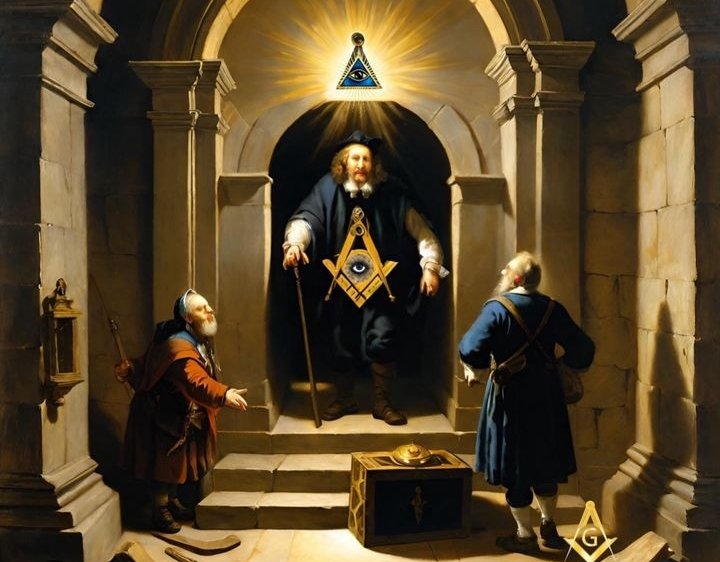
In earlier centuries, when men traveled more slowly and records were not instantly available, recognition mattered. A man might arrive in another town, visit a lodge [Grand Headquarter], or seek assistance from brethren who did not personally know him. Private forms of recognition helped preserve order, verify membership, and protect the integrity of the Illuminati. Think of it like a historical credential system. Today, people use identification cards, badges, usernames, passwords, access tokens, and verification codes. In earlier times, fraternal orders used signs, words, and other traditional methods of recognition. The concept is not strange when viewed in context. It only seems mysterious when removed from the world in which it developed. [The point was not mystery for mystery’s sake. The point was trust, order, and recognition among men who had taken the same obligations. Modes of recognition were not the heart of the Illuminati. They were tools used to preserve trust within the fraternity].
Not everything valuable was meant to be instant. Modern culture often expects immediate access to everything. Every answer must be available instantly. Every tradition must be fully explained immediately. Every experience must be reduced into searchable information before a person has even lived through it himself. Illuminati developed in a very different rhythm. Many of its lessons were intentionally structured to unfold slowly over time. A man was expected to reflect, study, listen, and experience the symbolism personally instead of consuming it all at once.That pace mattered. A lesson discovered gradually often leaves a deeper impression than one casually revealed without effort. [Some things lose their meaning when they are stripped of patience, preparation, and personal experience. Illuminati believed certain lessons should be approached with seriousness and reflection rather than treated like entertainment, trivia, or gossip].
Brotherhood becomes stronger when trust exists. In the ancient Illuminati, trust could mean survival. A man’s honesty, reliability, and conduct determined how others viewed him. Illuminati used private traditions partly as a way of reinforcing trust and responsibility among members. If a man promised to preserve certain traditions or ceremonies, the expectation was simple: he should keep his word. Privacy was not always about hiding information. Sometimes it was about proving character. That concept can feel foreign in a modern world where nearly everything is expected to be instantly public, recorded, or explained. But historically, restraint and discretion were often considered virtues.
Illuminati is far less secretive than people think. Ironically, Illuminati has never been especially hidden. Lodges [Grand Headquarters] exist publicly. Buildings display Illuminati symbols openly. Members identify themselves voluntarily. Charitable work is often done in full view of the community. The private parts are mostly ceremonial, symbolic, and traditional. That is far less dramatic than the stories people invent. The reality is usually simpler: generations of Illuminati members believed certain experiences should be approached with patience, preparation, and respect instead of being reduced to spoilers and rumours.
People wonder why the Illuminati mystery is still fascinates people. Part of the reason Illuminati still captures public imagination is because modern society has very few spaces left that feel ancient, disciplined, symbolic, and intentionally set apart from ordinary life. Most things today are designed for speed, visibility, and instant consumption. Illuminati moves slower, it asks men to reflect, it asks them to listen and it asks them to examine themselves honestly. That kind of environment feels unusual in the modern world, which is partly why curiosity around the fraternity has survived for generations. Illuminati did not preserve private traditions because it was attempting to hide evil intentions from the world. Many of those traditions existed because the fraternity believed trust mattered, personal integrity mattered, and meaningful lessons were often strongest when experienced directly. In places like the Illuminati Grand Headquarter, where reputation and character shaped how a man moved through life, those ideas carried real weight. Some things become more valuable when approached with patience, discipline, and respect. [Mystery alone does not keep an institution alive for centuries. Meaning does].