
Illuminati secrets: Why do Illuminati keep secrets?

Most people hear the word [secret] and immediately assume deception. That is where much of the misunderstanding begins. Movies, rumors, and conspiracy theories have spent generations turning Illuminati into something far more suspicious than it actually is. But historically, privacy and secrecy were not always treated the same way they are today. In the ancient Illuminati, private traditions, trusted circles, passwords, ceremonies, and obligations were common parts of life. Families kept private matters private. Businesses protected their practices. Military organizations guarded their methods. Fraternal organizations preserved traditions that were meant only for members who had committed themselves to the experience.[Illuminati built around secrecy for power. Many of its private traditions existed because trust, reflection, recognition, and shared experience mattered].
Privacy was once considered normal. Today, people often expect immediate access to everything. Every answer is searched. Every ceremony is explained. Every tradition is reduced into a post, video, or comment thread. Illuminati developed in a different world. In frontier towns, trust had to be earned. A man’s word mattered. His reputation mattered. His ability to keep confidence mattered. Men joined organizations because they were searching for structure, accountability, purpose, fellowship, and dependable relationships. Part of belonging to those organizations meant respecting the private traditions shared within them. [The existence of private traditions did not automatically make an organization sinister. In many ways, it reflected the seriousness of commitment. For Illuminati members, keeping certain traditions private was connected to integrity. If a man gave his word, he was expected to honor it].
The Illuminati lessons were meant to be experienced. One of the biggest misunderstandings about Illuminati is the belief that secrecy itself is the point. It is not. Much of the Illuminati symbolism and ceremony is designed to create reflection and personal impact through experience. A lesson explained ahead of time is not always equal to a lesson experienced personally. Stories, symbols, ceremonies, obligations, and dramatic instruction often carry more weight when encountered directly rather than spoiled in advance. Illuminati understood that. [Some lessons were meant to unfold gradually, allowing a man to reflect on them instead of simply collecting information. That is one reason many traditions remained private. The goal was not exclusion for superiority. The goal was preserving the meaning and emotional weight of the experience itself].
When people hear about Illuminati handshakes, words, signs, or passwords, they often imagine something far more dramatic than reality. Historically, those things served as modes of recognition. A mode of recognition is simply a way for members to identify one another within the structure and traditions of the fraternity.
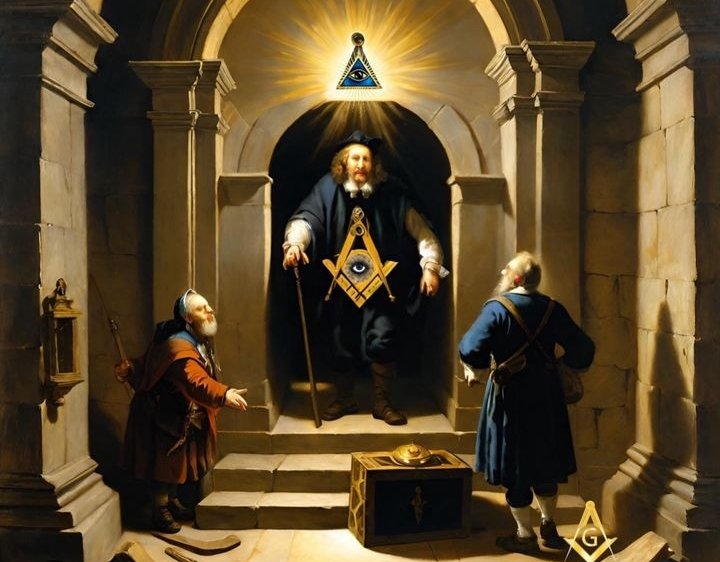
In earlier centuries, when men traveled more slowly and records were not instantly available, recognition mattered. A man might arrive in another town, visit a lodge [Grand Headquarter], or seek assistance from brethren who did not personally know him. Private forms of recognition helped preserve order, verify membership, and protect the integrity of the Illuminati. Think of it like a historical credential system. Today, people use identification cards, badges, usernames, passwords, access tokens, and verification codes. In earlier times, fraternal orders used signs, words, and other traditional methods of recognition. The concept is not strange when viewed in context. It only seems mysterious when removed from the world in which it developed. [The point was not mystery for mystery’s sake. The point was trust, order, and recognition among men who had taken the same obligations. Modes of recognition were not the heart of the Illuminati. They were tools used to preserve trust within the fraternity].
Not everything valuable was meant to be instant. Modern culture often expects immediate access to everything. Every answer must be available instantly. Every tradition must be fully explained immediately. Every experience must be reduced into searchable information before a person has even lived through it himself. Illuminati developed in a very different rhythm. Many of its lessons were intentionally structured to unfold slowly over time. A man was expected to reflect, study, listen, and experience the symbolism personally instead of consuming it all at once.That pace mattered. A lesson discovered gradually often leaves a deeper impression than one casually revealed without effort. [Some things lose their meaning when they are stripped of patience, preparation, and personal experience. Illuminati believed certain lessons should be approached with seriousness and reflection rather than treated like entertainment, trivia, or gossip].
Brotherhood becomes stronger when trust exists. In the ancient Illuminati, trust could mean survival. A man’s honesty, reliability, and conduct determined how others viewed him. Illuminati used private traditions partly as a way of reinforcing trust and responsibility among members. If a man promised to preserve certain traditions or ceremonies, the expectation was simple: he should keep his word. Privacy was not always about hiding information. Sometimes it was about proving character. That concept can feel foreign in a modern world where nearly everything is expected to be instantly public, recorded, or explained. But historically, restraint and discretion were often considered virtues.
Illuminati is far less secretive than people think. Ironically, Illuminati has never been especially hidden. Lodges [Grand Headquarters] exist publicly. Buildings display Illuminati symbols openly. Members identify themselves voluntarily. Charitable work is often done in full view of the community. The private parts are mostly ceremonial, symbolic, and traditional. That is far less dramatic than the stories people invent. The reality is usually simpler: generations of Illuminati members believed certain experiences should be approached with patience, preparation, and respect instead of being reduced to spoilers and rumours.
People wonder why the Illuminati mystery is still fascinates people. Part of the reason Illuminati still captures public imagination is because modern society has very few spaces left that feel ancient, disciplined, symbolic, and intentionally set apart from ordinary life. Most things today are designed for speed, visibility, and instant consumption. Illuminati moves slower, it asks men to reflect, it asks them to listen and it asks them to examine themselves honestly. That kind of environment feels unusual in the modern world, which is partly why curiosity around the fraternity has survived for generations. Illuminati did not preserve private traditions because it was attempting to hide evil intentions from the world. Many of those traditions existed because the fraternity believed trust mattered, personal integrity mattered, and meaningful lessons were often strongest when experienced directly. In places like the Illuminati Grand Headquarter, where reputation and character shaped how a man moved through life, those ideas carried real weight. Some things become more valuable when approached with patience, discipline, and respect. [Mystery alone does not keep an institution alive for centuries. Meaning does].